




HELENA — Whenever state government needs to buy a product or service it can’t provide itself, it goes through a procurement process to choose a contractor. On Friday, Montana lawmakers heard a presentation, laying out recommendations for how agencies can improve that process.
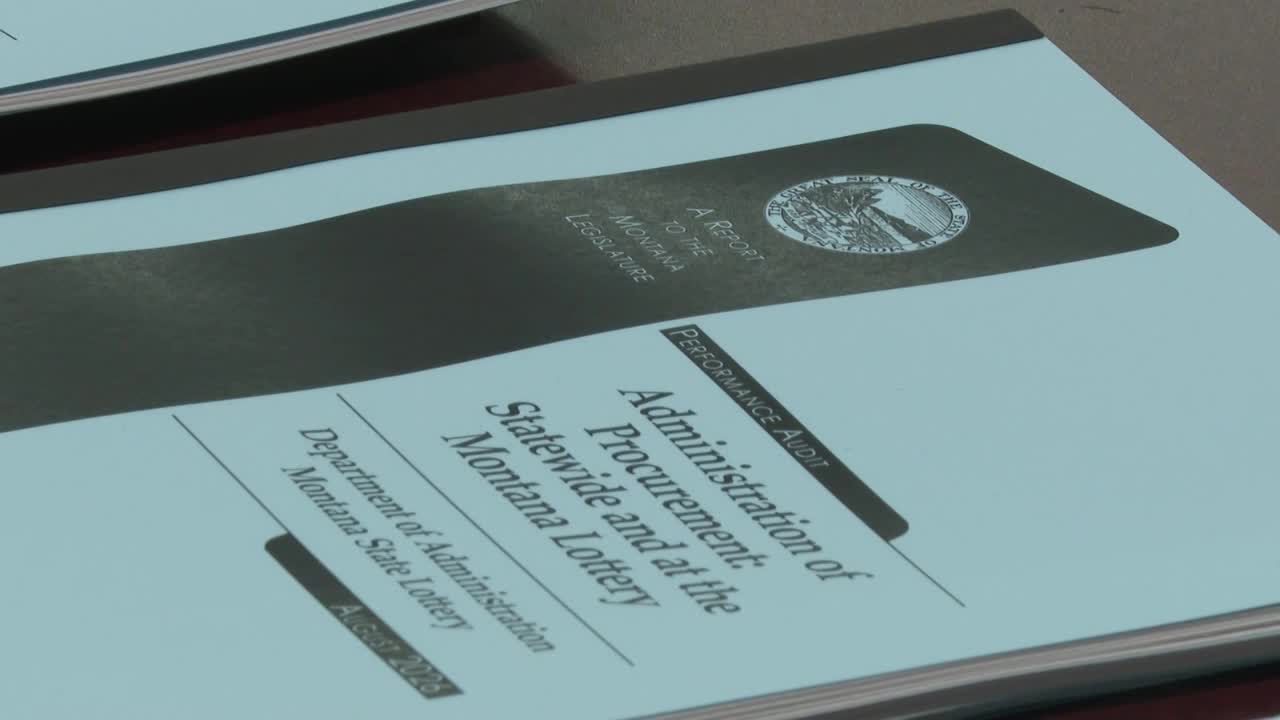
Staff with the Legislative Audit Division delivered a 60-page report on state procurement to the Legislative Audit Committee. It came after questions about the state’s policies for selecting contracts surfaced several times during the Montana Legislature’s 2025 session.
(Watch the video for more on the auditors' findings.)
Auditors said they found the standard procurement process – competitive bidding open to multiple vendors – has generally proven reliable. They analyzed 24 of those solicitations from recent years, and they found only minor violations of the requirements.
“As a result, the legislature and the public can be confident that standard procurement activities are conducted appropriately and public funds are expended in a fair and transparent manner when standard procurement processes are followed,” the report said.
However, they found more issues in two alternative processes: sole-source procurement, when an agency works with only one vendor because it’s clear they’re the only one that can realistically meet the requirements; and exigent procurement, when an emergency or other time-sensitive situation means there’s no time to go through the standard process.
Auditors said they reviewed 30 sole-source solicitations and found 18 of them hadn’t provided enough information to justify not going through a full bid process – and four, worth a total of just under $7 million, were approved “despite, in our judgment, there being a reasonable doubt that the relevant statutory requirements were fulfilled given the information available.”
The report said only 18 exigency declarations have been filed over the last four years. Auditors said all of them were legitimate emergencies, but in almost every case, the agencies failed to provide enough explanation on why they chose a particular vendor or show that they sought as much competition as possible.
Mark Blasdel, the newly appointed director of the Montana Department of Administration, told lawmakers DOA is already working on new guidelines to ensure the alternative procurement methods are only used when it’s appropriate.
“These agencies face things on a rare occasion that they do need to be able to have those processes and need to be able to act fast, but certainly, working to implement better documentation,” he said.
Molly McLoughlin, DOA’s agency procurement manager, said there are situations that are obvious emergencies, like last year’s flooding that damaged the Farm to Market Bridge near Libby. In other situations, she said staff will be asking questions about whether agencies could have done more to avoid resorting to an exigent solicitation.
“Poor planning doesn’t mean it’s an emergency,” she said.
The Audit Division’s report also looked specifically at one particular contracting decision: the Montana Lottery’s selection last year of a main vendor to manage its games.
Since 2006, the lottery has awarded that contract to the same vendor: Intralot, a subsidiary of a Greek company. In 2024, leaders began preparing for the next solicitation.
While the Montana Lottery Commission was ready to make a full request for proposals, that didn’t happen immediately. Intralot submitted a proposal to the state, and Lottery Director Bob Brown and other state leaders held further negotiations with the company – an option available to them because of a 2023 law that allowed the lottery not to go through the RFP process.
At Friday’s hearing, Brown said he stood by that decision.
“That was my choice to fully explore that, because I believe that was the right thing to do for the people of Montana, to be sure that we were getting the best deal,” he said.
When the 2025 legislative session began, lawmakers raised questions about why the lottery hadn’t opened the RFP process. The Lottery Commission chose to move forward with a full RFP, and the Legislature passed a bill that reversed the 2023 law.
In the end, two vendors applied for the contract, and leaders selected Intralot. However, the new contract included more favorable terms for the state. Intralot previously received 8% of the revenue generated by lottery games it manages, and it now gets just over 5%. Auditors said that would save the state about $17.6 million compared to Intralot’s initial offer.
“There's still some negotiation that could have happened based off of that unsolicited offer, where perhaps the lottery could have gotten a lower rate, so we don’t know that reality,” said David Singer. “But in general, for such large contracts, assuming the RFP is done diligently, the existence of competition makes vendors submit a lower rate, all else equal.”
Brown said Intralot had indeed been willing to drop its revenue rate during negotiations with the state. Still, he said the result was positive – though he argued the company’s lower rate was largely due to timing.
“I feel good about the fact that we did what we did, because we know that we have presented every option possible to the commissioners and they made the right choice,” Brown said.
Since last year, DOA has been going through a process to increasingly centralize state procurement. Leaders have argued that will help improve oversight on contract decisions.
