




HELENA — Montana’s attorney general has issued a legal opinion that could bar a prominent state lawmaker from the ballot this year.
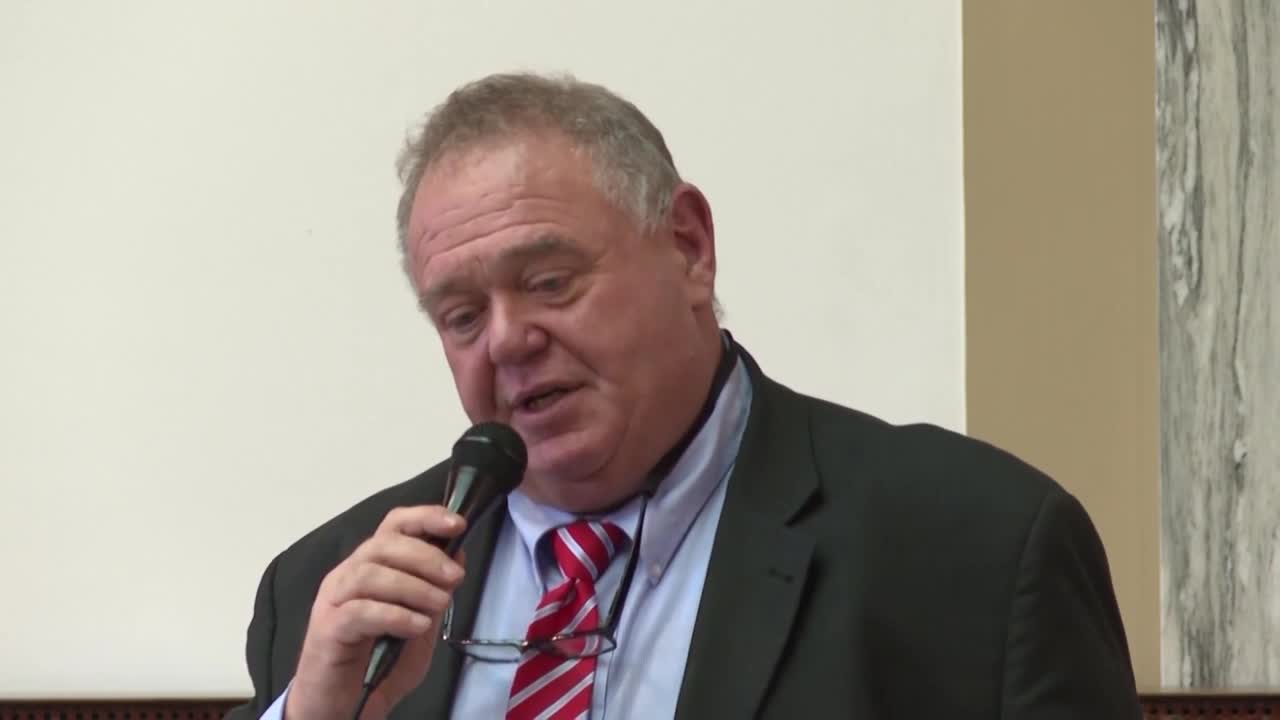
Rep. Llew Jones, R-Conrad, is one of the state’s longest-serving lawmakers, having been in the Legislature since 2005. He’s currently running to return to the Montana Senate, where he served from 2011 to 2018. However, according to Attorney General Austin Knudsen’s newly submitted opinion, Jones would not be eligible for the ballot because of term limits.
Jones told MTN this was part of a politically motivated effort to force him from office.
(Watch the video for more on Knudsen's opinion.)
Last month, Senate President Matt Regier, R-Kalispell, requested Knudsen provide a legal opinion interpreting whether Montana’s term limit laws prevented Jones from appearing on the November ballot. Knudsen delivered his response to Montana Secretary of State Christi Jacobsen’s office on Tuesday.
An amendment to the Montana Constitution, passed by voters in 1992, says state lawmakers and executive officers can hold their positions for eight years in any 16-year period. In 2012, future Gov. Steve Bullock, then serving as attorney general, issued a legal opinion saying that calculation of time begins at the start of the term an official is running for. The effect has been that a lawmaker can serve eight years in the House, move on and spend eight years in the Senate, then immediately return to the House. Jones, for example, served six years in the House, then eight in the Senate, then eight more in the House and is now again seeking a Senate seat.
However, Knudsen’s opinion says Bullock’s interpretation was incorrect and that the 16-year clock applies at the time of the election, not at the start of the next term. Effectively, he argues an official would have to wait at least one more election before running for the position they had previously been termed out of.
“The Constitution has never permitted eight years outside an office, standing alone, to restore ballot eligibility,” Knudsen wrote.
Knudsen said in his opinion he would not give a specific opinion on whether Jones or any other specific candidate is eligible for office, but he submitted his ruling to the Secretary of State and said “the secretary must apply it in the first instance.”
A spokesperson for Jacobsen’s office told MTN they had received Knudsen’s opinion and that it will go into effect when it is officially published in the state’s administrative register on Friday.
The Secretary of State’s Office is required to certify the names of candidates who will appear on the November ballot by next Thursday, Aug. 20.
An attorney general's legal opinion has the weight of law but can be challenged in court.
Jones is one of the most influential members of the Montana Legislature, particularly for his role in shaping the state budget. He has been one of the most visible members of a more moderate faction of Republican lawmakers that has clashed with Regier and his staunchly conservative allies. During this year’s primary, Regier supported Rep. Zack Wirth, R-Wolf Creek, against Jones in Senate District 9. Jones won the June primary 52%-48%.
“Matt Regier and the Freedom Caucus spent unprecedented amounts trying to beat me at the ballot box,” Jones said in a statement to MTN Wednesday. “They lost. Now they want the Attorney General to hand them a legal opinion that does what the voters wouldn't. Doing that means overturning a long-established precedent — one a previous Attorney General affirmed and one that has stood the test of time.”

Since 2012, it has become relatively common for legislators to move back and forth between the House and Senate after being termed-out. MTN has found at least five lawmakers, from both parties, have returned to a chamber eight years after being termed-out.
“An incorrect interpretation does not become correct merely because it remains unchallenged, and fourteen years of administrative practice cannot amend the Constitution,” Knudsen wrote in his opinion.
In addition to Jones, one other lawmaker – House Majority Leader Rep. Steve Fitzpatrick, R-Great Falls – might also be affected in the upcoming elections. Fitzpatrick served in the House from 2011 to 2016, then again starting in 2025, for a total of eight years in the chamber since 2010. He is currently running for another term in the House.
Rep. Ed Buttrey, R-Great Falls, could have been affected. He served in the Senate from 2011 to 2018 alongside Jones and sought to return this year, but was defeated in the GOP primary.
Knudsen’s opinion said this restriction would only prevent a candidate from appearing on the ballot, and that termed-out officials could remain in office if elected as write-in candidates. However, the deadline to apply as a write-in candidate for this election passed last week.
In his request for a legal opinion, Regier asked Knudsen to respond quickly, to give the Republican Party time to replace Jones on the ballot if he’s determined to be ineligible. The last day a party could replace a nominee would be next Wednesday, Aug. 19.
However, it isn’t clear whether state law accounts for filling a vacant nomination under this type of circumstance. Montana code states the political party can replace a nominee after the primary and before the general election if they die, withdraw or are disqualified for failing to fill out required campaign finance paperwork.
