

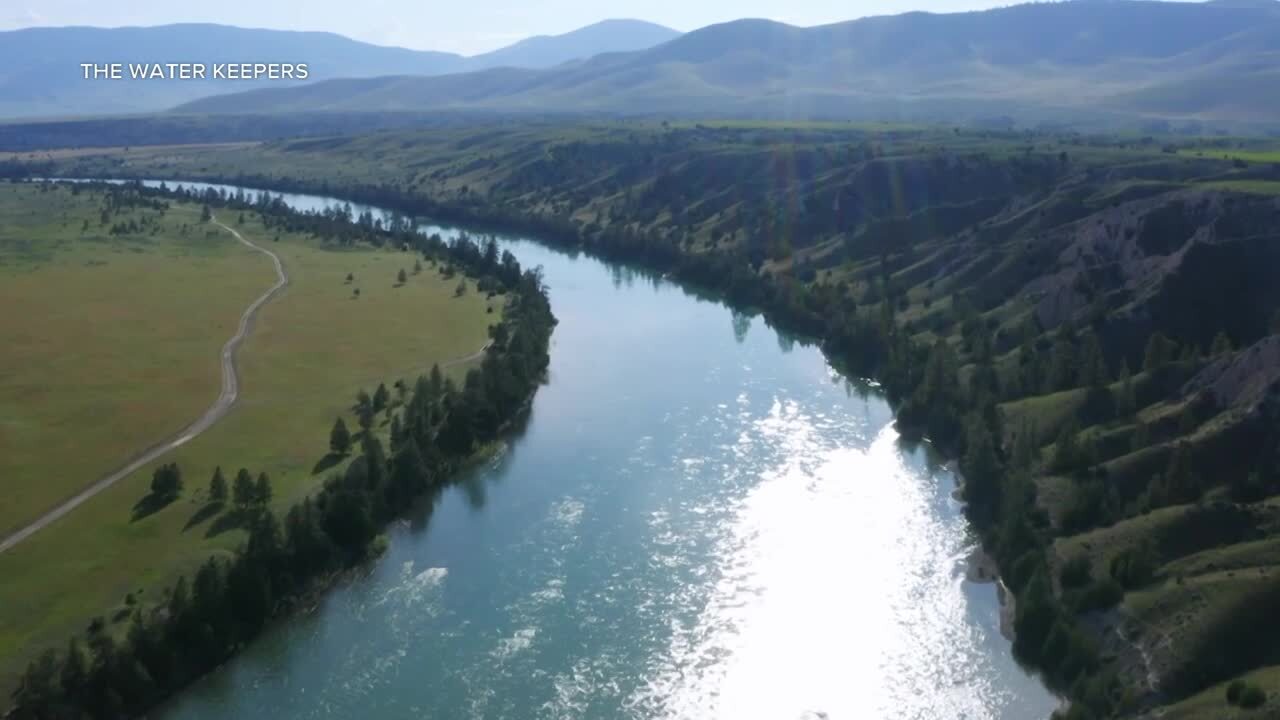


MISSOULA — A new documentary highlighting one of the largest water rights settlements in U.S. history is making waves at the Big Sky Documentary Film Festival, where it's competing for a major award.
"The Water Keepers" tells the story of how the Confederated Salish and Kootenai Tribes used decades of scientific research to secure their water rights on the Flathead Reservation. The short film premieres Sunday at 1 p.m. at the Wilma Theater and is one of eight finalists for the Big Sky Award.
"It's a very exciting time to tell this story," said Casey Ryan, co-producer of the film.
Watch the full story:
CSKT hydrologists have used science to protect their waters on the Flathead Reservation for decades. The tribes began collecting hard data from stream gauges across the Flathead Basin in the 1980s.
"The water measurement program was started in the 1980's. It was rooted in a generational responsibility to protect our water resources that is so important to our tribes," Ryan said.
The information proved crucial during water rights negotiations that helped secure the CSKT Water Compact, which became law in 2020.
"The water compact is a multi-government agreement between tribes, the state of Montana and the federal government. What makes our compact unique is [that] it is a technically driven compact that was founded upon good science, that the tribes have been engaging in for decades," Ryan said.
Ryan is a hydrologist turned filmmaker who co-produced the documentary with Robert McDonald. The film showcases generations of tribal work and scientific data that ultimately led to one of the biggest water settlements in U.S. history.
"You realize these are heroes. This is a story of success and it is an untold story," McDonald said.
McDonald says this once-controversial topic is now being recognized on the big screen.
"It is nice to be acknowledged, for someone to say you did a nice piece of art and we would like to share it with a wide crowd," McDonald said.
The filmmakers emphasize the importance of documenting this achievement while key figures are still alive to share their stories.
"We have so many people, elders and leaders who were key in negotiating this settlement, who are still with us, who are still working and still engaged in these efforts, I think it is so important to highlight their work and inspire the next generation of people who are going to pick up that baton and ensure that we can continue to protect our resources," one of the producers said.
"This story was reported on-air by a journalist and has been converted to this platform with the assistance of AI. Our editorial team verifies all reporting on all platforms for fairness and accuracy."
