



MISSOULA, Mont. — For many families, food is about more than nourishment. It can be closely connected to religion, culture, family and a sense of home.
That idea is at the heart of a partnership between Missoula Food Bank & Community Center and Soft Landing Missoula, which is bringing culturally familiar food directly to refugee and immigrant families in Missoula.
The satellite pantry launched this summer after the organizations asked an important question: What foods actually work for the families they serve?
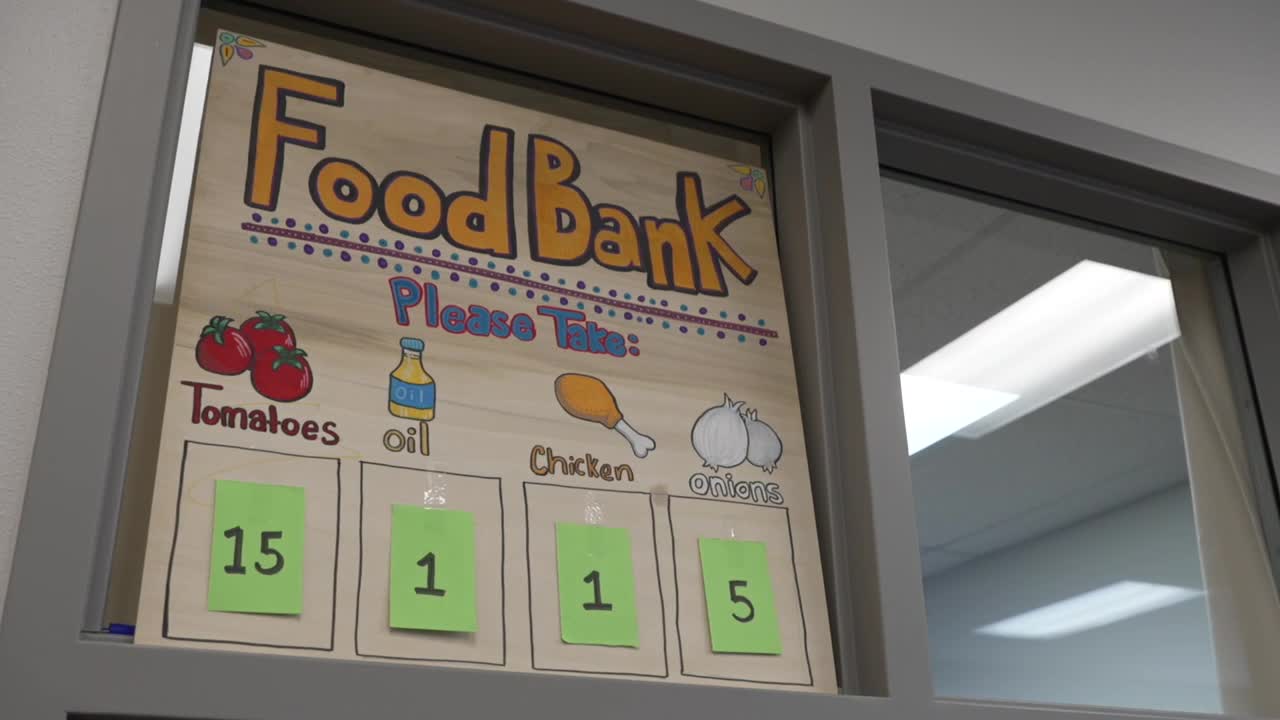
Twice a month, the Missoula Food Bank brings halal meat, tomatoes, onions, rice, cooking oil and other staples to Soft Landing, where it distributes the food to roughly 80 refugee and immigrant families.
Amy Allison, executive director of Missoula Food Bank & Community Center, said the organization had worked with Soft Landing for years to find better ways to serve immigrant and refugee families.
“We realized the best way to address the gap that we're really experiencing is to just bring food here to Soft Landing,” Allison said. “So starting in July we started a little pilot to try out what it would be like to bring food here for families.”
The pantry was designed around feedback from the people who use it. Soft Landing asked participating families what ingredients they wanted and what quantities would actually be useful in their kitchens.
That distinction matters, according to Greta Bates, Soft Landing’s director of community partnerships and client services. Many families cook meals in larger quantities, so receiving just a small amount of a staple may not meet their needs.
“The regular food bank is an awesome place for people to get certain staples, but there are just a lot of people [who] cook in large quantities,” Bates said. “And so larger quantities of kind of fresh produce, onions, tomatoes, oil, and then meat is really important.”
Halal meat is particularly important for many Muslim families. Halal foods meet Islamic dietary requirements, much as kosher foods adhere to Jewish dietary laws.
Bates said the pantry helps provide that food in a familiar place.
“We’re just really grateful that the food bank was able to step up and do this mobile pantry for us,” she said.
One of the people using the pantry is Abeer Naji, who is from Yemen and is Muslim.
Naji said Soft Landing provides a comfortable environment for families who may face language barriers or feel uncertain navigating other services.
“They are really smiling. They are said to you, like, you feel here like you are in your family house,” Naji said. “That's what I feel really. That's my home.”
Naji said the types of food provided also make a difference. Families can take the items they know they will use and leave others for someone else.
“Here with Soft Landing we just find something we needed, and we took what we all need and we left it another for more family,” she said.
She specifically pointed to staples such as rice, oil, onions and vegetables, along with halal meat. Naji said she appreciates the assistance but also hopes the program can grow to provide families with more food and a greater variety.
“We are so happy when this coming oil, helping, onion, vegetables, everything coming here,” Naji said. “Really, we say thank you.”
The pantry is currently operating twice a month, and organizers say the need remains significant.
Bates said Soft Landing has worked with people from Afghanistan, the Democratic Republic of Congo, Yemen, Syria, Venezuela, Guatemala, Colombia and other countries.
She also hopes the food program continues to expand.
“Food insecurity is still on the rise,” Bates said. “There’s still more items and more food needed. So, yeah, I think this is a fun start to this, and we would love to see it grow.”
For Naji, the program is about more than the food on the shelves. It's also about feeling welcomed in the community.
“I love Missoulian people,” she said. “They are generous, really. They are generous. I love them.”
