

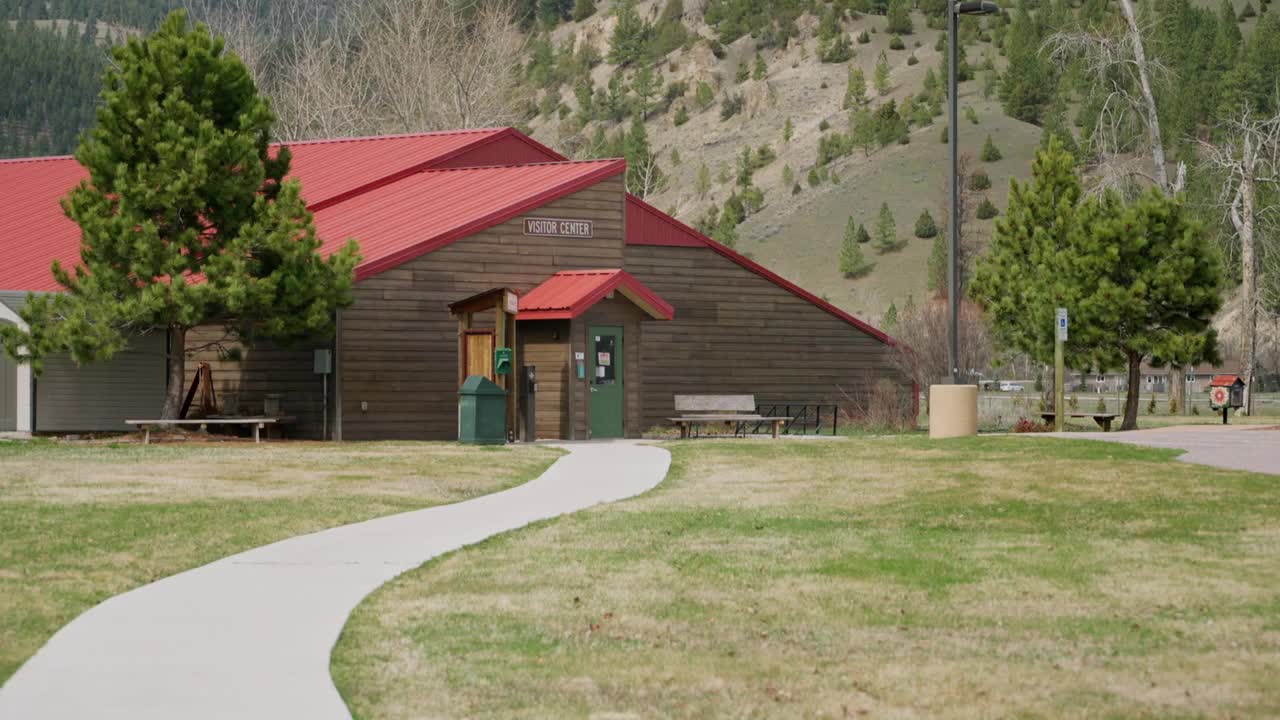


LOLO — While Lolo's Travelers' Rest has been literally a rest stop for travelers for centuries, it's now celebrating 25 years as a State Park.
"We're getting probably in the vicinity of eighty thousand visitors a year here now from all over the world," volunteer Dale Dufour told MTN.
Travelers' Rest was first labeled as a national historic landmark in 1960, but it's history predates that by a long time.
Both Salish ancestors and Lewis and Clark spent time near Lolo Creek.
Initially, 700 acres were identified as an approximate area where Lewis and Clark camped.
"Two of the men's journals said, well, they camped in a plane about two miles up from the river. And here we had the National Historic Landmark down at the river," Dufour said recalling the movement of the National Historic Landmark.
However, tracing the explorer duo's exact spot was a journey in itself.
"So, the local chapter of the Lewis and Clark Trail Heritage Foundation here said, well, if they didn't camp there, where did they camp? And that's what started the hunt for the site here," Dufour said.

A button manufactured in the time frame from 1760 to 1812 was found. So were rocks from a blazing hot fire, lead, and mercury excrement.
"The campsite here was laid out in accordance with the military guidelines that were drawn up for by George Washington's direction by a gentleman named Baron von Steuben and in the 1760s. And the latrine site fit right in with that layout. And when the archaeologists did the digging in that area, had a mercury vapor analyzer and the dirt contains still contain mercury vapor," Dufour explained.
Now, it's been 25 years since Travelers' Rest was officially named a State Park.
It's used for many community events in every season.
"We get a tremendous number of local people that there is no other park here for them. People walk the trail. A lot of them have been here many times out on the ground, but never have been inside the visitor center. We ask them, finally get them inside there and show them because we've got a lot of interpretation in there, not just about the travelers rest, but about the Salish," Dufour detailed.
Long-time volunteers hope the history will continue to draw people in for years to come.
"It's something that is hard to explain. It gets in your blood. Everybody that's been involved here never seems to forget that, and they hate to leave here," Dufour said.
