

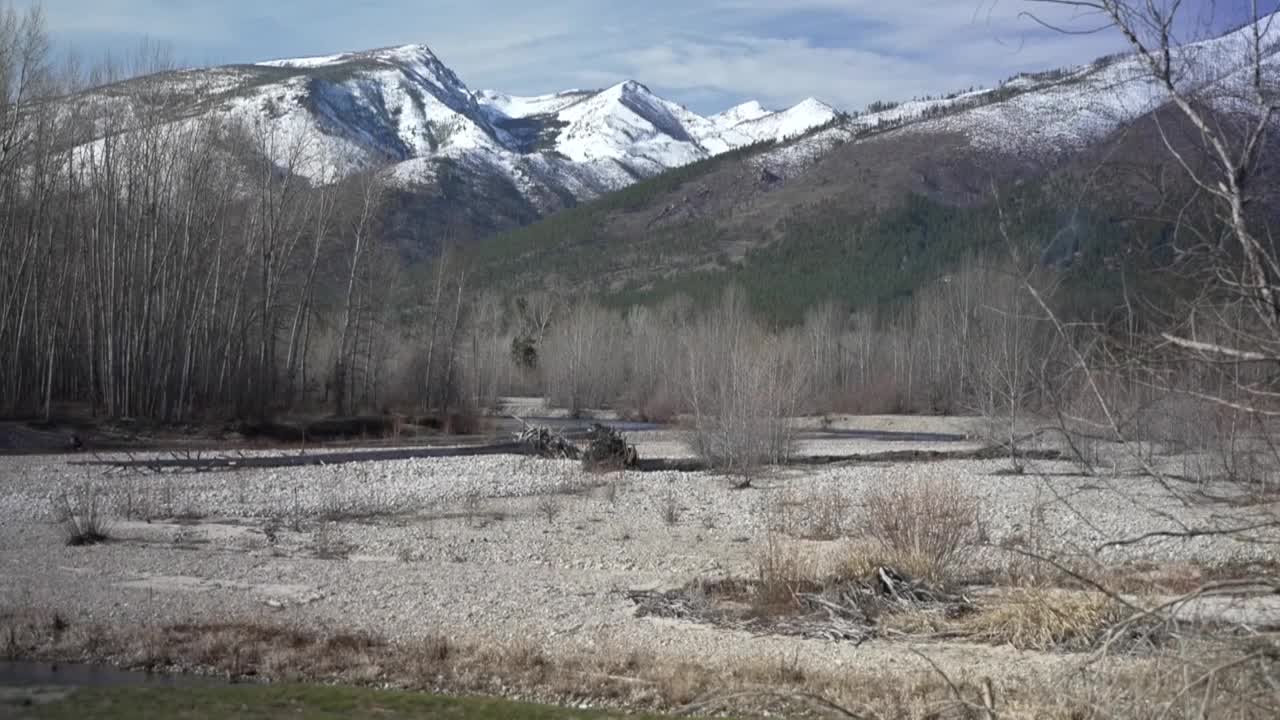


MISSOULA — Much of Montana saw strange weather this winter, from high winds and historic floods to high temperatures and less snow. As winter turns to spring, many are wondering about what this could mean for fire season.
“Obviously people that are skiers, things like that, backcountry recreationists, they know that the landscape looks different than it should this time of year,” said Dan Borsum, a wildland fire service meteorologist with the Northern Rockies Coordination Center. “We flooded in Libby and places like that. But, when we came into February, January, we got warm. So, we not only were dry, but we were warm.”
MTN meteorologist Erin Yost said that, while it was one of the top 15 least snowiest winters for both Missoula and Kalispell, it was not even in the top 100 driest on record.
“It started off really warm, really wet. December was crazy. We had so much moisture,” she said. “When the ground should have been frozen, it wasn’t. It was not frozen at all.”
This year, much of our moisture fell as rain, not as snow. This lead to flooding, like in Northwest Montana in December. It also, however, lead to deeply saturated soil. For Borsum and other researchers, analyzing potential impacts of this winter’s weather on the upcoming fire season goes just as deep.
“There are soil moisture sensors down in the ground. They're sensing moisture 20 to 40 inches deep,” Borsum said.“The fact that we had the moisture in November and December and it didn't stay as a form of snow, it doesn't mean that it's gone to us.”
He believes that, depending on the weather to come, this soil moisture could act as a “buffer” during part of fire season. It could help prevent some fires from spreading, especially by stopping trees from burning out of control if their roots reach into that moisture.
“While we go through this warm weather in winter and we start seeing a little bit of grassland fire trouble and things like that, the bigger question becomes 'are larger trees impacted?'” Borsum said. “I suspect that they are drawing some moisture from those deeper layers.”
Borsum said it is too early to predict what the upcoming fire season will look like. In Montana, spring and early summer bring vital moisture and indicators.
“When it comes to fire season, June is the number one predictor of whether we'll have a significant fire season or not in terms of the missing moisture in the system,” he said. “Right now, the outlooks don't give us a lot of signals for April through June, so normal's good, right?”
Montana does not usually even see peak snowpack until April.
“I know throughout the majority of this winter a lot of folks were super concerned with the lack of snowpack that we had. Of course, it was like non-existent for our valleys and even mid-levels, but up high we actually maintained a fairly decent snow pack,” Yost said. “Now, moving into spring, Mother Nature delivered in a really big way, so that really helped us with the replenishment of the snowpack.”
Borsum is cautiously optimistic, although it depends on what the weather does next. Still, he said it is a great reminder to get prepared for fire season by removing brush from yards, making an emergency plan and other tasks.
“You know, sometimes a dry winter, while it's a concerning thing, it does start to recharge the batteries in thinking about fire season, which we're going to be dealing with,” he said. “It's inevitable that we'll have some fire and it's just practicing those reflexes which will come into play later on.”
