

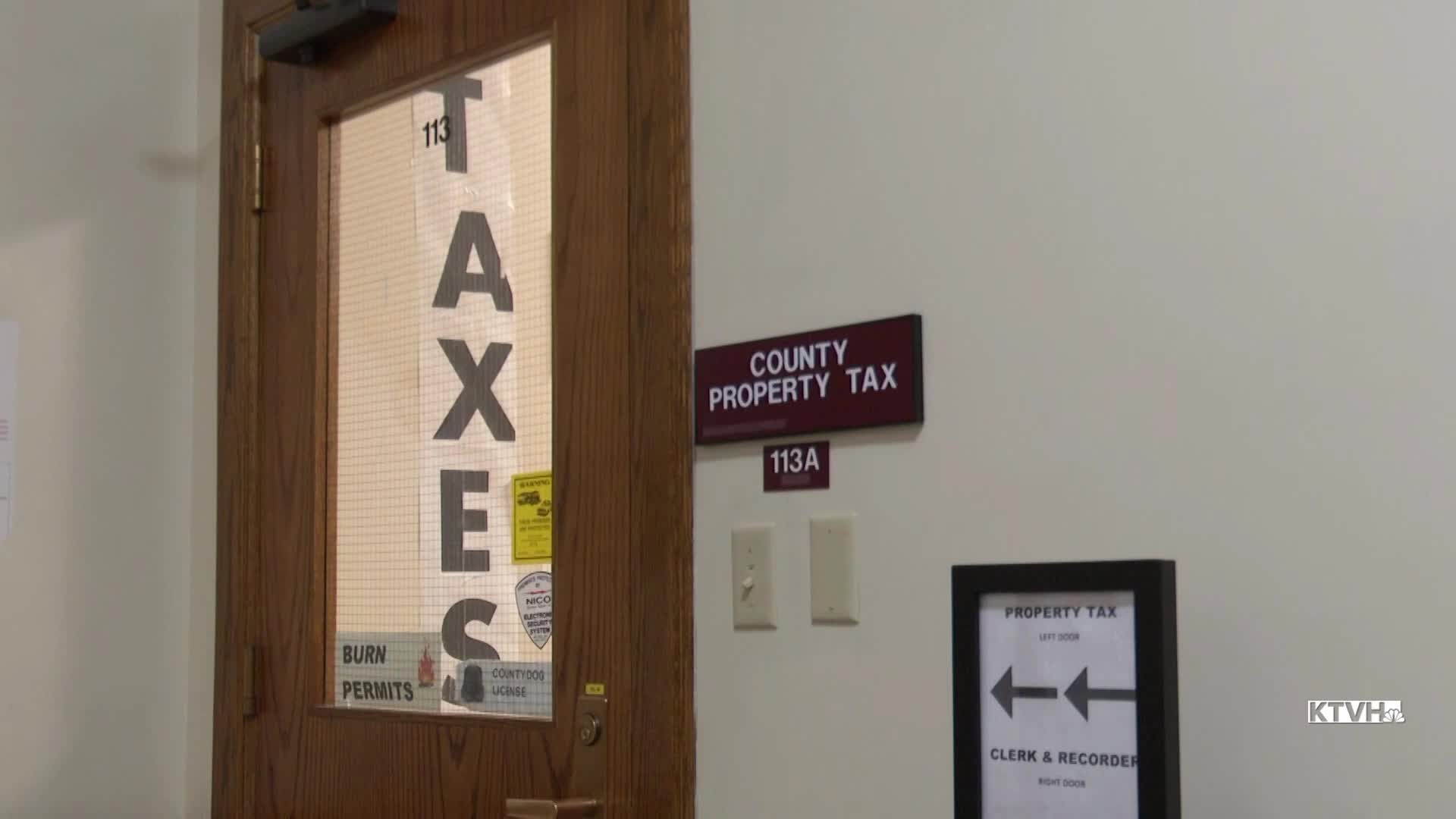



HELENA — During the Montana Legislature’s 2025 session, lawmakers passed major reforms to the state’s property tax system. Now, one Republican lawmaker wants to go a step further and put a ballot measure before voters that would put new caps on local governments’ taxes.
“We gave a really good try last session, and then this will continue to build on it,” said Sen. Wylie Galt, R-Martinsdale.
(Watch the video for more on what the proposed ballot measure would do.)
Galt submitted a proposed constitutional amendment, currently with the temporary title of Ballot Issue #11, to the Montana Secretary of State’s Office. It would add a requirement to the state constitution, banning local governments from increasing the total property taxes property owners pay by more than 2% per year, except for the value of new property or improvements. The measure would not apply to school districts, and it would provide an exemption if a majority of voters in a jurisdiction vote for an increase.
“This makes sure that it doesn't continue to rise at the levels it has been and gives people certainty going into the future, what their property tax bill is going to look like across all classes,” Galt said.
During the 2025 session, leaders like Gov. Greg Gianforte frequently pointed to local government spending as a major cause of Montana’s spike in property taxes. Galt says he has seen data indicating typical annual growth for local jurisdictions has been close to 6% over the last 20 years.
Currently, how much more a local government can increase the taxes it collects is determined by a formula that holds it below the rate of inflation. Jennifer Olson, government affairs director for the Montana League of Cities and Towns, says that already makes it challenging for their members to provide the services residents need – and this amendment would add to that pressure.
“Our communities are growing, and this would definitely affect our ability to provide those services,” she said.
Olson said schools are responsible for the biggest share of most residents’ property taxes, and that excluding those districts from this measure would put a greater burden on municipalities and counties. She argued it was premature to take this step without first seeing the full impact of the homestead tax rates passed in 2025, which won’t be fully implemented until this year.
Galt says he didn’t include school districts in the amendment because their taxes are already limited through the state’s school funding formula. He believes the proposal is appropriate now as a way to address the growth of property taxes from a different angle than the homestead rates.
“I think it comes down to, as we've seen, that even when that reduces taxes, they're still going to continue to go up in the future,” he said.
Ballot Issue #11 drew immediate support from House Republican leadership, including Speaker Rep. Brandon Ler, R-Savage, and House Majority Leader Rep. Steve Fitzpatrick, R-Great Falls. However, some have argued Galt’s proposal doesn’t go far enough.
“It has so many exemptions, it offers no real relief to Montana property owners,” said Matthew Monforton, an attorney from Bozeman.
Monforton submitted a property tax initiative of his own last year, Constitutional Initiative 130, after having previously sponsored initiatives on the subject for the 2022 and 2024 elections. CI-130 would seek to slow the growth of taxes by capping increases in property values. It would limit the annual increase in a property’s valuation to 2%, unless the owners make improvements or sell it.
Monforton argued that without capping assessments or increasing the requirement for passing local tax levies from a simple majority to a 60% supermajority, this new amendment wouldn’t achieve its stated goals. He said he saw Galt’s measure as a way to “thwart” other reform proposals.
“This is just a charade,” he said. “It's not real property tax relief, but it will make people feel like there's property tax relief, at least temporarily – until they get their new property tax bills afterwards.”
CI-130 was approved for signature gathering last June, but Monforton said supporters didn’t have the money to mount an aggressive campaign for it. He said he doubted they would get enough signatures to get the measure onto the November ballot.
In order to qualify for the ballot, constitutional initiatives need signatures from at least 60,241 registered voters, including a minimum number in 40 of Montana’s 100 state legislative districts. The deadline to turn in those signatures will be June 19. Signature gathering on BI-11 won’t be able to start until Attorney General Austin Knudsen’s office rules on whether it’s legally sufficient.
“It is a very tight time window, but I'm fully committed to trying to get it there,” Galt said.
Galt says he doesn’t think this measure would prevent the state from looking at other options to slow property tax growth in the future.
“There's still a lot of room to legislate around this,” he said. “I mean, this isn’t an end package.”
EDITOR'S NOTE: This article has been updated to clarify what Ballot Issue #11 would do.
