


More than a century after President Theodore Roosevelt traveled through Paradise Valley by train on his way to Yellowstone National Park, the historic corridor that once carried visitors to America's first national park is beginning a new chapter.
WATCH: First phase connects Livingston to Yellowstone on abandoned rail corridor
Community leaders, conservation groups and residents gathered Wednesday in Emigrant to celebrate the groundbreaking of the Yellowstone Heritage Trail, a project that will transform an abandoned rail corridor into a 56-mile multi-use trail connecting Livingston to Yellowstone National Park.
The first phase of the project is a nearly $3 million, three-mile segment in Emigrant designed to improve pedestrian and bicycle access while preserving a piece of the valley's history.
Roosevelt traveled the rail line in 1903 during a visit to Yellowstone, but while the trains and tracks disappeared decades ago, the corridor itself remained intact.
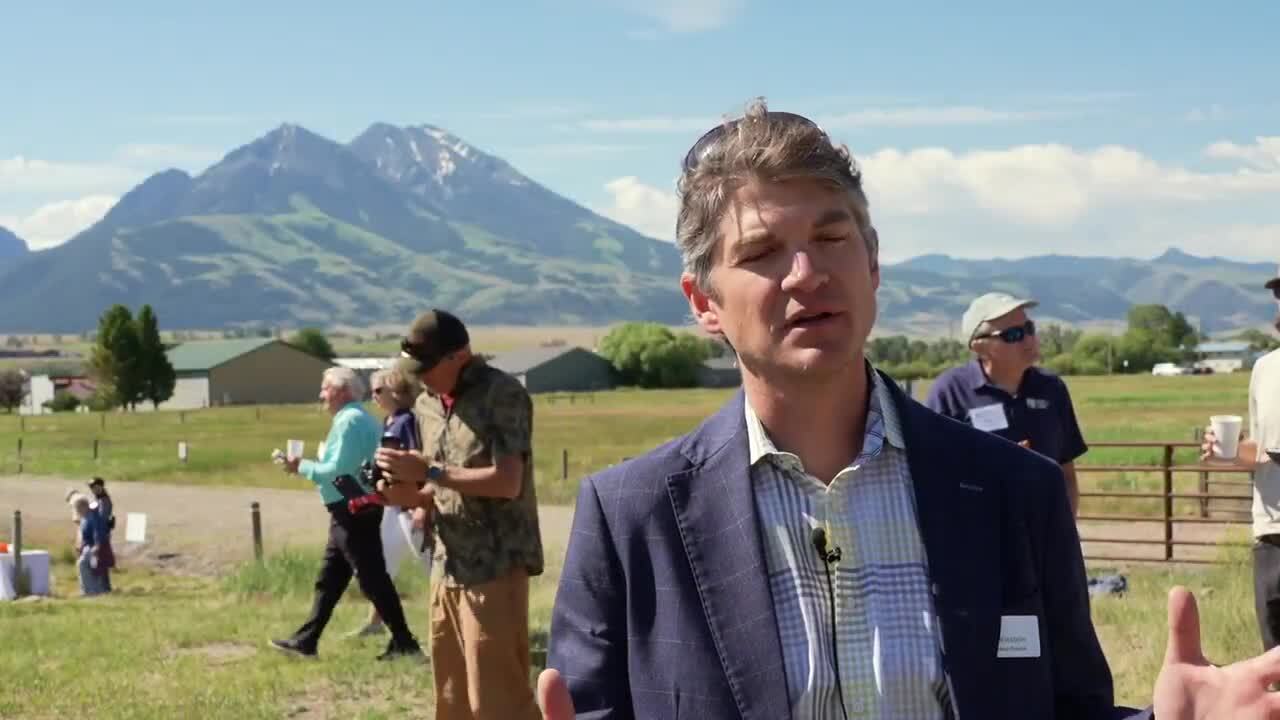
"So thrilled that we are here today to celebrate the history, the current moment and the future of this valley," said David Weinstein, Northern Rockies director for Trust for Public Land.
Trust for Public Land is partnering with Park County and other organizations to develop the Yellowstone Heritage Trail, which supporters say will provide safer transportation options for residents while expanding recreational opportunities throughout Paradise Valley.
"We want to make sure everybody has the ability to access as much land as we can help enable," Weinstein said.

Once completed, the trail will provide a safer route for people walking and biking through Paradise Valley, while connecting communities along U.S. Highway 89 to Yellowstone National Park.
Supporters said the project is about more than recreation.
"Provide an opportunity for children, for people to visit businesses to get out of their cars and slow down on what is a dangerous corridor through Paradise Valley on Highway 89," Weinstein said.
Park County Environmental Council Executive Director Erica Lighthiser said the project also preserves a historic transportation corridor while creating new opportunities for future generations.
"People have walked and traveled the pathways through Park County at human speed for thousands of years, now thanks to this project and hopefully the sections of trail that will follow, we won't be the last," Lighthiser said.
The first three-mile segment has been more than a decade in the making, with Park County, nonprofit organizations and state and federal partners collaborating to move the project forward.

Officials also announced Yellowstone National Park plans to eventually convert the temporary five-mile road between Gardiner and Mammoth into a multiuse trail after a new permanent road is constructed. The temporary road was built after historic flooding in2022destroyed the original route connecting the two communities.
Lighthiser also highlighted the project's inclusion in the Great American Rail-Trail, a planned coast-to-coast trail network.
"And now the Yellowstone Heritage Trail is included in this national vision for the Great American Rail-Trail ... that eventually will connect Washington, D.C., to Seattle on a separated multiuse path," she said.
As ceremonial shovels hit the ground Wednesday morning, supporters celebrated not only the start of construction, but the continuation of a route that has connected people to Yellowstone for more than 100 years—this time by foot and bicycle instead of rail.
