

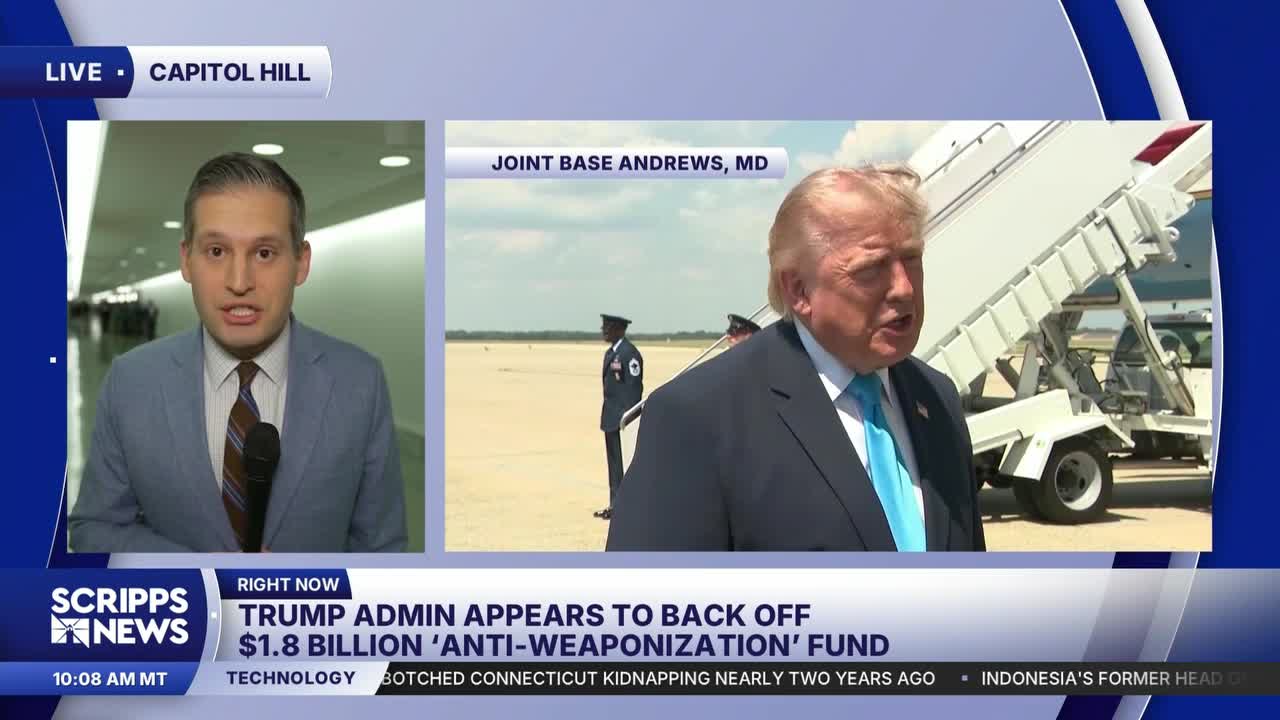


Senators from both parties are demanding permanent action to kill a $1.8 billion Department of Justice anti-weaponization fund, even as Acting Attorney General Todd Blanche told a House panel yesterday the fund is dead.
President Donald Trump, in an interview released Wednesday, suggested he has not fully dropped the fund and that people "should be compensated" — fueling skepticism on Capitol Hill that Blanche's assurances are enough. He said that the fund was being dropped because of court rulings.
Senator Bill Cassidy, a Republican from Louisiana who recently lost his primary to a Trump-backed challenger, said he is not satisfied with the acting attorney general's word alone. Cassidy said he wants to make sure the fund is fully dead — not just mostly dead — and that he would support efforts to pass legislation or an amendment on the Senate floor to permanently ban its creation.
Senator Elizabeth Warren, a Democrat from Massachusetts, echoed that concern and made clear Democrats will continue to press the issue.
RELATED STORY | DOJ scrapping $1.8B 'anti-weaponization fund,' Blanche says
"No, they will call it dead so long as it is politically expedient for them to do so. We will only know that that fund, that slush fund, is dead when we make that the law, that the president cannot do this," Warren said.
The bipartisan pushback comes as a separate $70-plus billion package to fund ICE and Border Patrol has stalled in part over congressional anger over the anti-weaponization fund. If that bill comes to the Senate floor in the coming days, Democrats are expected to force a vote on legislation that would permanently block the fund's creation.
Major questions remain about whether President Trump would sign such a law and whether the Republican-controlled House would pass it.
Controversy also surrounds a separate element of the deal: a reported agreement that the IRS would not investigate Trump, his family members, or his business associates — either retroactively or in the future. Many members of Congress from both parties have called that arrangement unacceptable. Lawmakers are weighing whether to force a vote on legislation that would make no one immune to IRS audits, though more questions than answers remain about whether Congress will pursue legal guardrails on that provision.
A handful of Republicans appear willing to break with the administration on both the anti-weaponization fund and the IRS settlement terms. Combined with near-unanimous Democratic opposition, there is a potential coalition to pass restrictions — though the path forward remains uncertain.
RELATED STORY | What is the Trump administration's $1.8 billion ‘anti-weaponization fund’ for?
