



For months, Americans have been watching prices go up, and families have been struggling to make ends meet. New economic numbers out Thursday indicate lower prices are likely not around the corner.
The producer price index — which captures inflation before it reaches consumers — went up 1.1% in May, and it’s up 6.5% compared to May 2025. That’s the highest year-over-year change since November 2022.
A report Wednesday put consumer inflation at 4.2%, so Thursday’s new data shows producers, or wholesalers, are paying higher inflation than individual customers. That means Americans can probably expect prices to keep going up.
“It's entirely reasonable to think that with wholesale prices rising further and more, that that has to be passed along at least to some degree to consumers. They can eat some of the price increase at the retail level, but that remains to be seen,” explained Mark Hamrick, a senior economic analyst at Bankrate.
The biggest reason for higher prices is energy. Wholesale gasoline prices surged by more than 23% from April to May — up nearly 70% from a year ago.
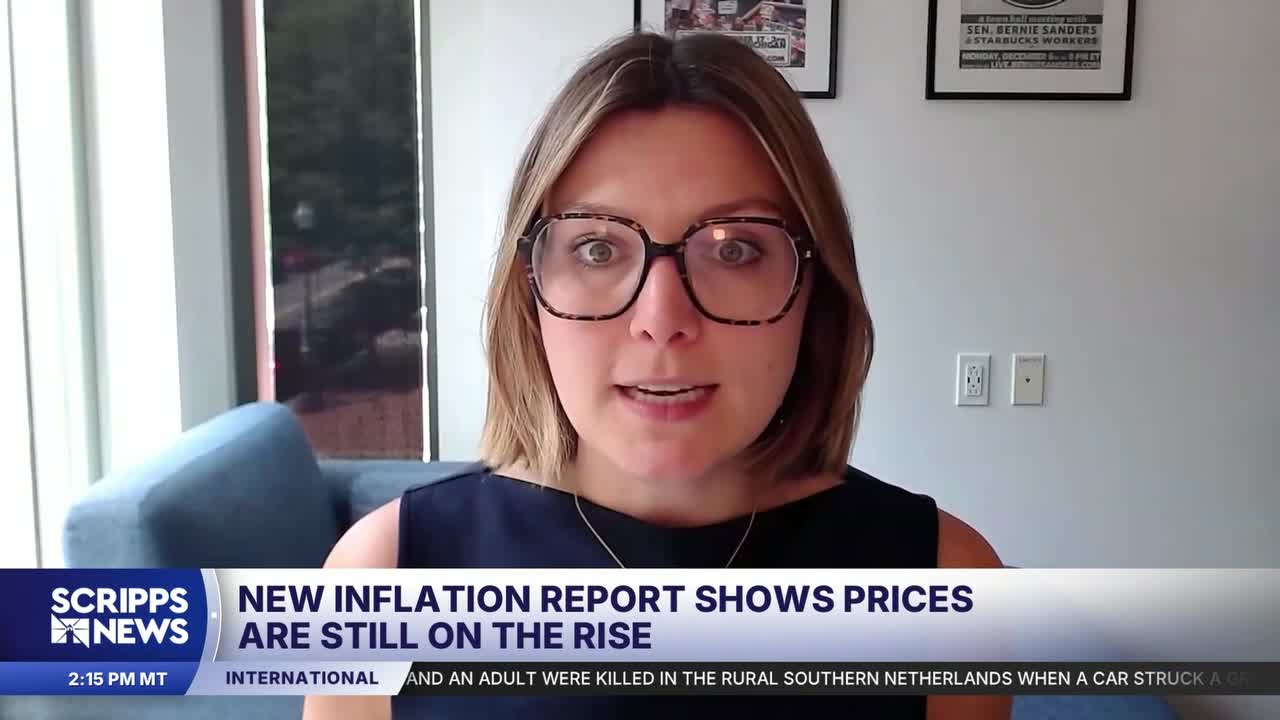
“Whether it's shipping food from a farm to your local grocery store or your summer vacation, all of that is obviously increasing the prices that you pay. It's a direct consequence of the Strait of Hormuz being closed for several months now,” said Elizabeth Pancotti, the Managing Director of Policy and Advocacy at the Groundwork Collaborative.
RELATED STORY | From unfilled gas tanks to fewer frills, here's how US consumers are rethinking their spending
The impact of high gas prices goes beyond just the cost of filling up the tank of a semi-truck or a cargo ship, and it could be a while before those high prices trickle down the supply chain to American consumers.
“The oil that is being shipped through the Strait of Hormuz right now, and then taken to a factory that turns it into plastic, and then shipped to Frito-Lay so that a bag of chips can be made, and then to your grocery store. That all takes time. And so we will see those really trickle down onto shelves for the duration of the year, even if tomorrow, somehow, we reach a deal in Iran to open the strait and kind of fix that global supply chain issue,” Pancotti explained.
The American economy has been pretty resilient so far. But with inflation going up, wages aren’t keeping up anymore, and economists warn that short-term financial fixes can’t last forever.
"We know that the savings rate is moving down. We know that there is higher utilization of credit cards, and with that, rising delinquencies, and so we need to essentially get past this period. We just don't know how long it's going to take,” said Hamrick.
A recent survey from the Federal Reserve Bank of New York found 36% of American families believe they’re worse off financially than they were a year ago. Unemployment is still historically low at 4.3%, with 229,000 people filing initial claims last week. But that same Fed survey found Americans are increasingly concerned about getting laid off.
All of these numbers will influence what the Federal Reserve decides to do with interest rates when they meet next week. It will be the first meeting under the new Trump-appointed chair, Kevin Warsh.
President Donald Trump has long been calling for the Fed to lower interest rates. But expectations are the board of governors will keep rates the same for now, but they could hint at interest rates going up later this year.
