

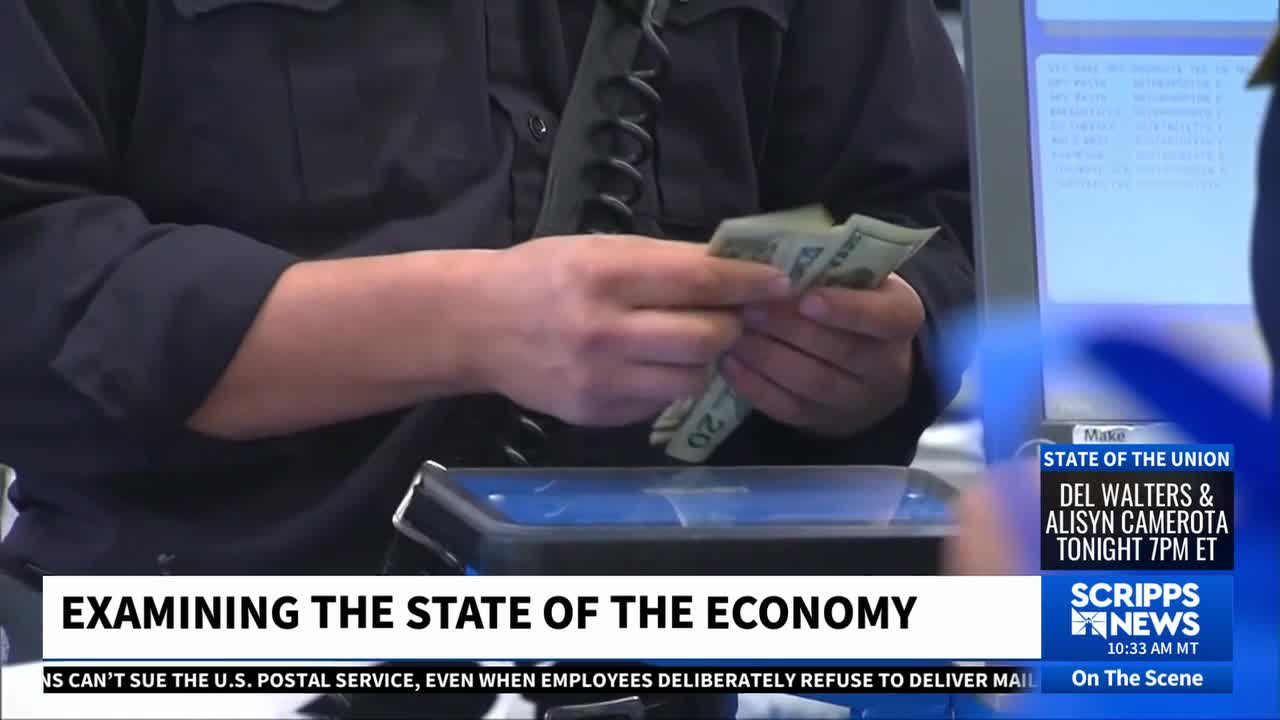


The economy is set to be a major theme in President Donald Trump’s State of the Union address.
Trump returned to the White House in January 2025 after making bold promises to turn around the economy. But 13 months into his second term, he has delivered mixed results.
"If I had to summarize the economy in one word, it would be uncertainty," said Abby Hall, associate professor of economics at the University of Tampa.
Inflation has eased, but Americans are still paying more for most goods than they were a year ago, especially many grocery items.
One thing that has gotten cheaper is the price of a gallon of gas, which is near its lowest point in years.
- RELATED: Businesses stare down more tariff uncertainty as Trump doubles down after Supreme Court ruling
Tariffs have been the president’s signature economic tool. They have helped generate more than $200 billion for the United States but have also contributed to supply chain uncertainty and inflation.
Nearly 90% of the economic burden of tariffs fell on U.S. businesses and consumers, according to a recent analysis by the Federal Reserve Bank of New York.
"There's no question that higher goods prices that are driving inflation right now are a direct result of tariffs," said Mark Hamrick, senior economic analyst at Bankrate. "The big question yet to be answered is whether we've seen the bulk of that impact and whether we'll see less of that in the current year."
The answer to that is now unclear after the Supreme Court struck down President Trump’s tariff authority under the International Emergency Economic Powers Act.
- RELATED: Scripps News/Talker Research poll: High interest in State Of The Union amid economic worries
On the jobs front, the labor market has softened.
The U.S. economy added just 181,000 jobs in 2025, far below the 1.5 million jobs the country has averaged annually over the past decade.
The most recent government data suggested improvements in hiring could begin in 2026.
"The overall picture from the job market is still one that really suggests that things are really sluggish," said Hall.
The stock market’s performance over the past year may be the economic indicator President Trump has highlighted most prominently.
The S&P 500, Dow Jones Industrial Average and Nasdaq are each up more than 10% since Trump returned to the White House, and all have hit new record highs over the past year.
"The reality is that Wall Street is not Main Street and so Wall Street might be very well," said Hamrick. "There's a broader question about how Main Street is fairing and small businesses are particularly challenged right now and tariffs are part of that."
