

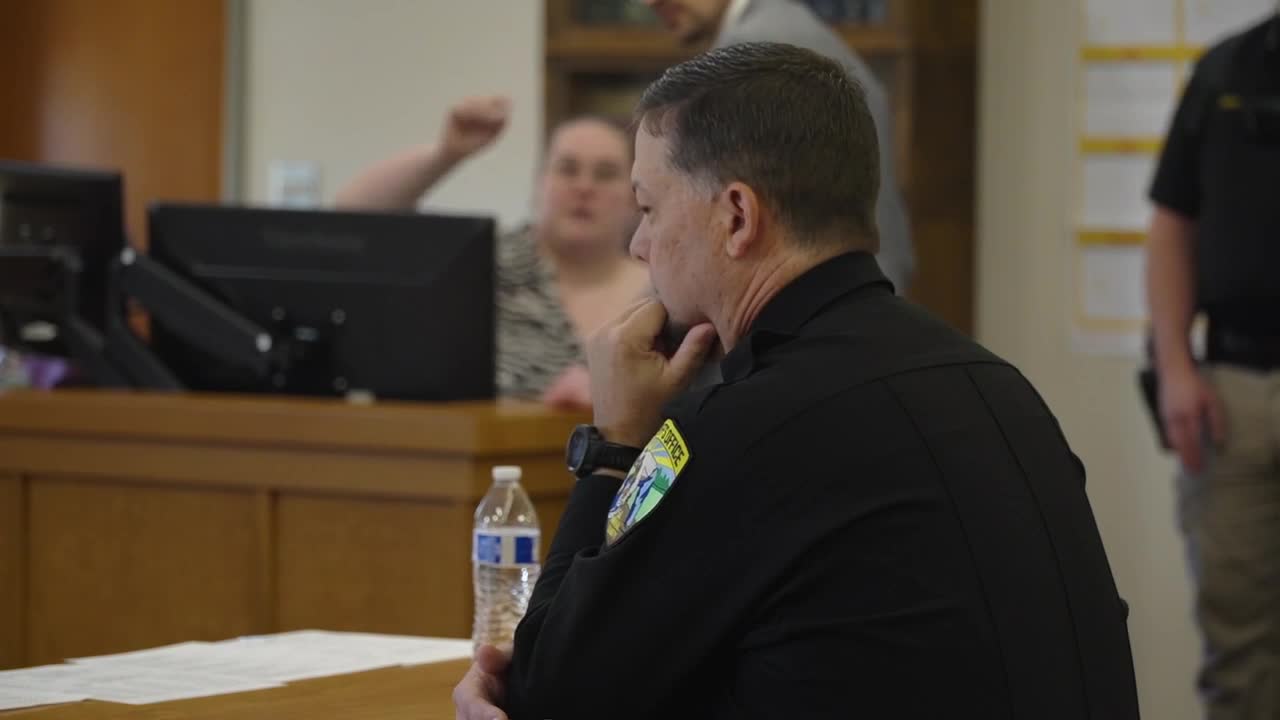


MISSOULA — On Monday, in front of Missoula District Court Judge Shane Vannatta, the case around allegations of misconduct by Mineral County Sheriff Ryan Funk continue to play out with the judge walking back his previous ruling.
“We can only review the order itself, which you all notice didn't contain a whole lot of facts. It wasn't a findings of fact, conclusions of law, or an order, but rather just simply an overview,” Missoula District Court Judge Shane Vannatta said.
The civil case centers on actions Sheriff Ryan Funke allegedly took while working as a Lake County Sheriff’s Deputy in 2017, before he became Mineral County’s Sheriff.
At issue is whether those allegations must be disclosed under what’s known as Brady law - a legal requirement that prosecutors share certain information with defense attorneys in criminal cases.
“Our position with the county attorney was that where there's a dispute over whether certain materials are subject to Brady disclosure, the sheriff felt, I felt, that the materials with regard to that deputy were not Brady material. And the county attorney felt that they were. And so the, our position was where there's a dispute, that’s what courts are for,” Paul Leisher, an attorney at Leisher & Landsiedel representing Sheriff Funke, said.
In a statement, the Mineral County Attorney’s Office said in part, “Under Brady, the State must provide to the defense any evidence material to the defendant’s guilt or punishment. “Within the meaning of Brady, material evidence is that evidence which, had it been disclosed, the result of the proceeding would have been different. This requires a prosecutor to disclose all material (significant) information within their possession and control, regardless of whether or not it is favorable to the prosecution.
A prosecutor is seeking to ensure that the criminal proceeding is fair, reliable, and consistent with due process, so that any conviction or sentence rests on an accurate and complete presentation of the facts. Brady/Giglio disclosure promotes confidence in the outcome by reducing the risk of wrongful convictions, safeguarding the integrity of the justice system, and fulfilling the prosecutor’s role as a minister of justice rather than an advocate for conviction at all costs.”
A sealed evidentiary hearing has been scheduled on May 13th in Mineral County; a ruling is expected to follow shortly after.
