

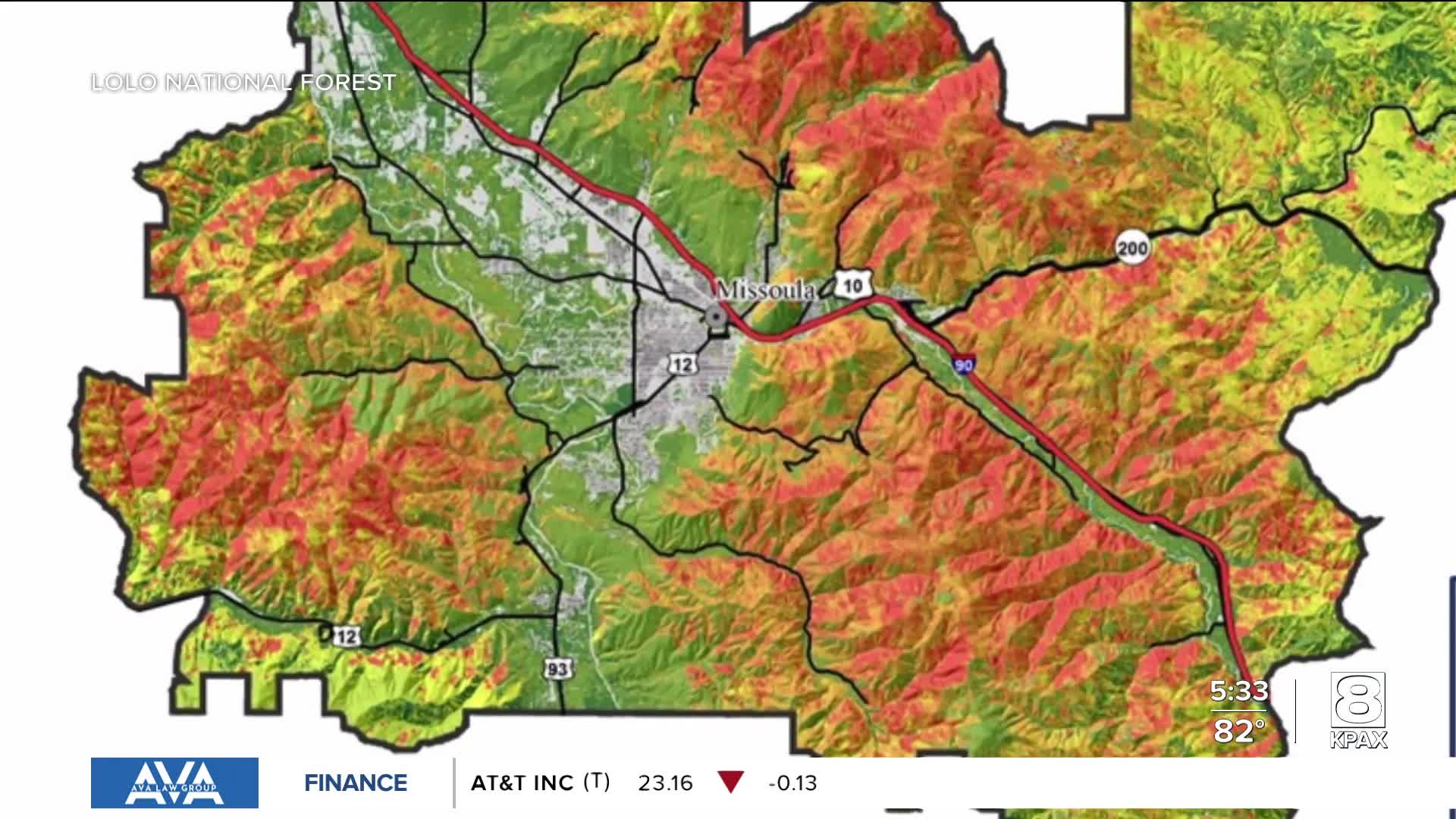


LOLO — Missoula County communities are used to dealing with wildfires, and a collaborative effort is underway to make them even more resilient. Wildfires do not follow boundaries or property lines, so the agencies behind the Wildfire Adapted Missoula (WAM) project are working together, across the county, land borders and jurisdictions.
(WATCH: Working together on wildfire preparedness — Inside the Wildfire Adapted Missoula project)
“The most recent mapping that we've had completed, there is no low risk for wildfire in Missoula County,” said Missoula County Wildfire Mitigation Program manager Tim Laroche. “It's all moderate and above.”
WAM revolves around a partnership between the Lolo National Forest, the Montana Department of Natural Resources & Conservation (DNRC) and Missoula County, as well as involvement from county residents.
“Wildfire Adapted Missoula is a fantastic example of collaborative land management, cross-boundary land management, where we really have come together to envision how we need to treat the landscapes to provide more resilient forests, both to future wildfires that may come through, but also to insects and disease,” said Missoula District Ranger Crystal Stonesifer with the Lolo National Forest.
The WAM project area encompasses a massive swath of Missoula County. Within that, there are about 820 acres near Blue Mountain that the Forest Service and DNRC are collaborating on fuel reduction under the Good Neighbor Authority, which allows agencies to work together across jurisdictional lines.
In the Blue Mountain and Lolo area, crews are tackling built-up fuels in the forest, in areas that advanced fire modeling determined posed elevated risk. The project is funded through the Forest Action Plan.
“This was a great spot for us to come and treat some fuels,” said DNRC’s Missoula Unit manager, Amy Helena. “Especially right around the edges of Missoula, there's some areas where fuels in the wildland areas are pretty thick.”
On the ground, crews use site-specific methods, like thinning and prescribed burns. These techniques open up dense thickets, clearing piles and piles of easily-ignited fuel. Andy Bidwell, a fuels specialist with the Lolo National Forest, said this replicates natural processes that the forest historically relied on: frequent, low-intensity fires to clear out brush and overgrowth.
“We live in a fire-dependent landscape,” he said. “Just through a century of fire suppression, because we have homes and things that we don't want to be impacted by fire, we've removed that process.”
Without these low-intensity fires, crowded brush and trees can ignite quickly and burn out of control, even acting like ladders, bringing fires from the surface into the forest canopy. Through projects like WAM, land managers aim to clear out fuels before they get the chance to spark into a severe fire.
“We want to reduce those fuels, so when my crews come to suppress wildland fire, we have a better chance of getting that done quicker and safer, as well as egress for folks to get in and out if there's a fire impacting their area,” Helena said. “By doing that ahead of time, you're buying time for the people on the ground when there is a fire, and that can make all the difference in the world.”
While the DNRC and Forest Service do fuels work on public land, Missoula County’s Wildfire Mitigation Program is working just across the boundaries.
“This project borders private property. The land management agencies do the work here and then we usually visit with the homeowners to address any concerns around their home, the things they can do to reduce their risk of wildfire,” said Laroche.
WAM is a priority in Missoula County’s 2018 Community Wildfire Protection Plan, which is currently undergoing an update process. The county and other local organizations work with homeowners to make their homes more resilient, which, in conjunction with the project area, helps prepare the county as a whole.
“It’s partnerships and everybody doing their part,” Laroche said. “The Forest Service doing what they can do on their land, the DNRC doing what they can do on their land, and then the county and non-profit organizations around the county helping private property owners do the work they need to do on their property is how we're going to end up with a wildfire resilient community.”
