


MISSOULA — When teenagers make mistakes and break rules or the law, they often get suspended from school or end up in the juvenile justice system.
But both scenarios can perpetuate the problem as students miss class, fall behind and lose connection with friends, said Amy Shattuck, assistant superintendent for Missoula high schools.
The Montana Free Press reports that for a different approach, Missoula County Public Schools this year partnered with the Kalispell-based nonprofit Center for Restorative Youth Justice, or CRYJ, to help hold students accountable while giving them a chance to learn from and repair the situation, rather than involving them in the juvenile justice system.
“This process really makes them take responsibility for some of the actions that happen, but also to fix it,” Shattuck said. “And that can only be a positive as they move forward in their life.”
CRYJ began as a youth peer court in 1998 and has since shifted its focus to work more closely with law enforcement to divert students from the juvenile justice system, said Catherine Gunderson, the organization’s executive director. Expanding to Missoula was a natural next step for the nonprofit, as school officials and other partners were interested and ready to take it on, she said.
The school district partnered with Missoula County Youth Court, which is funding CRYJ’s Missoula program, to bring the organization to the four high schools this year. Gunderson said she’s looking forward to exploring ways to have an impact in Missoula.
“We’re excited for them to have that opportunity for accountability, but also to really be the best version of themselves as they learn new skills and are challenged to think about and talk about their role in the community in a different way,” she said.
CRYJ’s restorative justice model gives students an opportunity to repair harm they caused and reconnect with their community, while a punitive model often further separates them, said Kaya Juda-Nelson, a co-director of CRYJ’s Missoula program.
“Sometimes we forget that teenagers don’t know everything,” she said. “Their brains are really still cooking, and they are really learning how to make decisions. I think that what CRYJ does is give them an opportunity to learn. A lot of times, we assume that because a person messed up, they intended to mess up, or it was a premeditated decision to do the wrong thing. And I don’t think that’s how it works.”
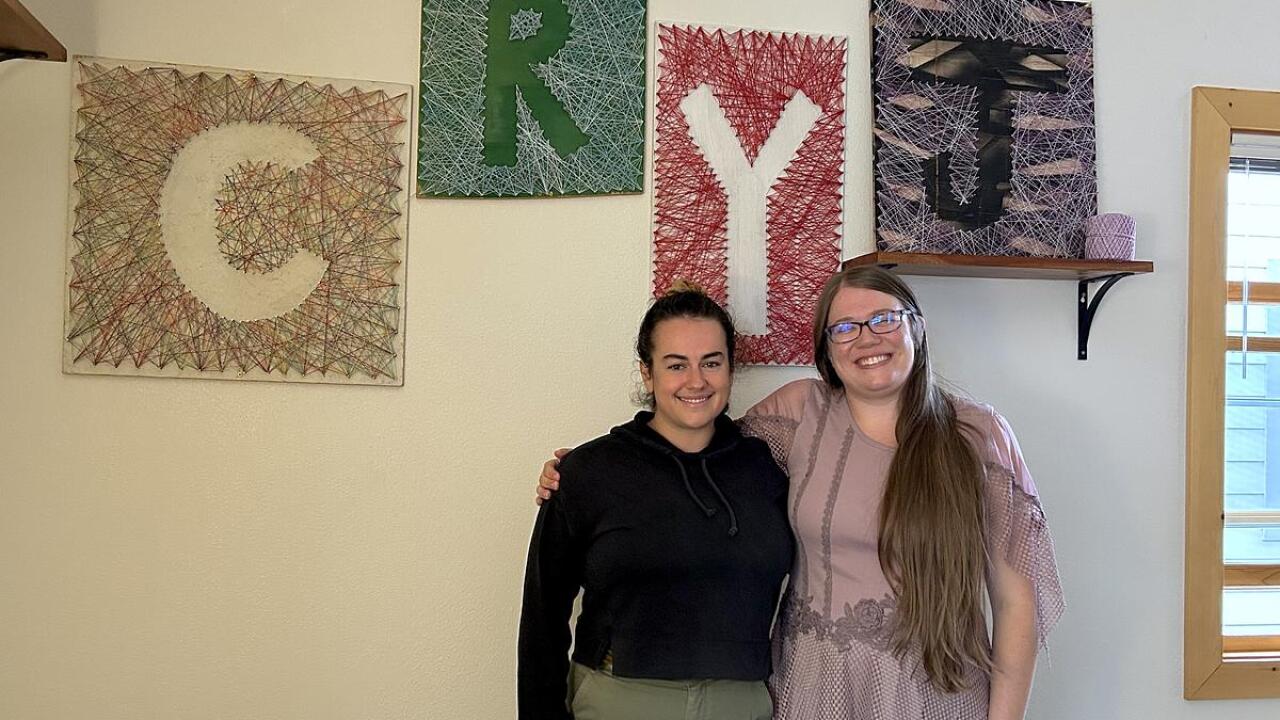
Juda-Nelson and her co-director, Emma Schmelzer, began setting up the Missoula program in August. Along with University of Montana master’s student Tara Cook, the co-directors receive referrals and meet with students individually and in groups. The program can help with various issues, including drug or alcohol use, bullying, assault, theft and other conflict resolution.
School administrators, school resource officers or Youth Court probation officers can refer students to the voluntary program. After a family conference and an individual meeting with the student, the CRYJ team will develop a program tailored to the student’s situation.
For example, if a student is referred for marijuana possession, they would likely take an educational workshop and discuss the circumstances that led to their drug use individually and in peer groups, Juda-Nelson said.
Depending on the situation, the program could include a victim-offender conference that brings together the student and any directly harmed parties.
“The core of restorative justice is about relationship building between everybody involved,” Schmelzer said. “We spend a lot of time separating people after there’s been harm, but often the deepest healing and learning and moving forward can happen … when we can actually come together and talk about what happened and how to make things right.”
Although the program takes a different approach than traditional discipline, it’s not letting kids off easy, Juda-Nelson said.
“I think that asking a kid to sit down and actually talk about what happened and work through it and express that vulnerability and really have to have an honest conversation about what was going on for them and why they engaged in whatever behavior or incident they engaged in, I think that is often much more challenging, for a teenager especially,” she said.
In the Flathead, the program has helped reduce the number of teens entering the juvenile justice system, out-of-community placements and recidivism rates, said Gunderson, CRYJ’s executive director.
Since 2017, when the program began receiving referrals directly, rather than students having to go to Youth Court first, the number of teens referred to Youth Court and the number of students receiving out-of-school suspension have decreased, according to data from CRYJ.
To better address the underlying causes of poor attendance, the Missoula County School District created a group with Missoula County Youth Court and other community partners to brainstorm solutions.10.10.2024
In the 2024/25 school year, CRYJ served 118 youths at a cost of $430 per person, compared to approximately 40 youths from Flathead County who were eventually detained at a cost of $6,815 per person, according to the organization. About 10% to 12% of teens who complete CRYJ reoffend, compared to 13% to 18% in Flathead County and 20% to 25% statewide.
Christine Kowalski, Missoula’s chief juvenile probation officer, said she’s hoping to see similar results as the program gets going in local schools.
Most juvenile cases in Missoula and statewide are handled informally by a probation officer, meaning the youth doesn’t appear in court before a judge, Kowalski said. However, CRYJ offers more services right off the bat and a better approach than going through Youth Court, particularly for a first-time ticket, she said.
That allows the students, many of whom have “skewed views” of law enforcement, to have a more positive experience, Kowalski said. Youth Court will continue to handle serious offenses, but ideally, CRYJ will help prevent students from making those decisions, she said.
Kowalski said she would like to see the program be successful and “work us out of a job.”
“That’s the bottom line,” she said. “The kids deserve to be successful, and a lot of times it’s not their fault that they’re in here. They’ve made poor choices because of circumstances that are out of their control, and we just need to help them get back on track.”
This story was originally published by Montana Free Press at montanafreepress.org.
